



Ravel Happening
Because of his fascination with timbres and dreamy melodies, Maurice Ravel, to his own dismay, was soon labeled an impressionist. However, Ravel himself considered composing a serious craft. With the precision of a Swiss watchmaker, he filed his scores until even the smallest nuance matched his perfectionism. deStudentenfilharmonie opens the day with an exploratory promenade through the multicolored spectrum of one of history's greatest orchestrators. The dark sounds of Mussorgsky's Pictures at an Exhibition were transformed by Ravel into luminous orchestral timbres. Ravel's symphonic tours de force are widely known, but those who really want to pay tribute to him certainly cannot ignore his chamber music and his songs. François Salque and Pierre Fouchenneret throw themselves into the flawless Sonata for violin and cello, where Ravel reduces the music to its melodic essence. In his Violin Sonata, Ravel then nods to blues and jazz.
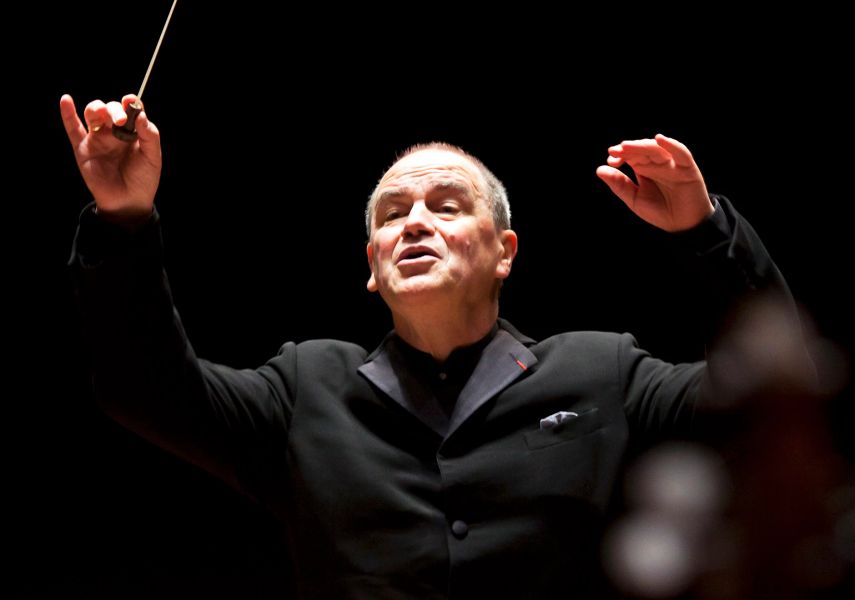
This same almost exotic influence is also extensively present in Ravel's best-known orchestral works. Maestro Hans Graf guides deFilharmonie through the two orchestral suites from Daphnis et Chloé that Ravel distilled from his original ballet, or rather his 'symphonie chorégraphique'. Elusive leitmotifs weave this surprisingly visual orchestral music into a structurally sophisticated whole. Because the piano should not be missing from this musical tribute moment, Nicholas Angelich ventures into Ravel's ecstatic Concerto for the Left Hand. Ravel's orchestral magic and sparkling chamber music holds the middle ground between sensibility and sophistication, between feeling and intellect. A total experience for the true melomaniac.
Programme
Ravel Daphnis et Chloé (suite no. 1)
Ravel Piano Concerto for the left hand
Ravel Daphnis et Chloé (suite no. 2)